📅 Overview
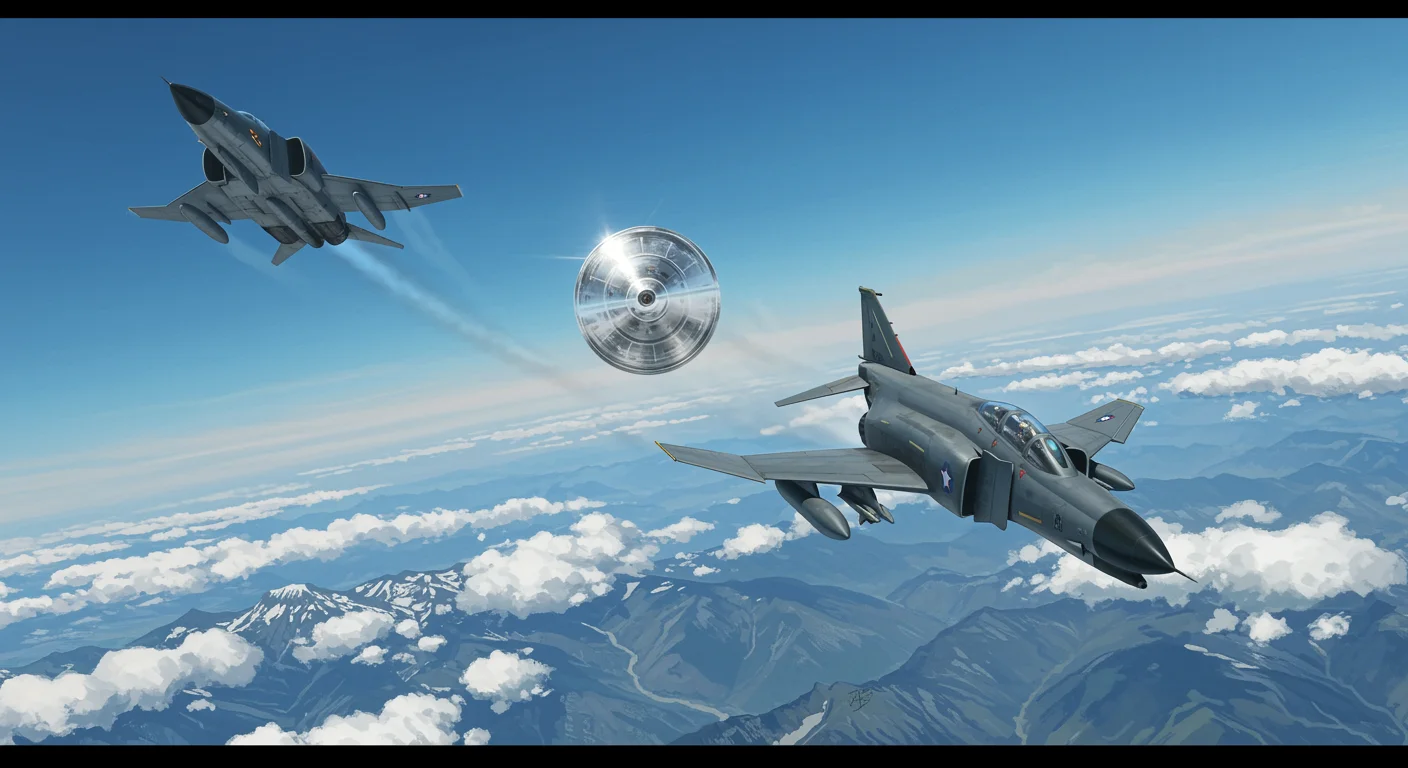
In March 1980, during the joint US-ROK military exercise Team Spirit, two ROK Air Force F-4D Phantom II fighters from the 11th Combat Flight Squadron (Daegu) encountered an unidentified flying object while flying from Daegu to Gangneung. With official pilot testimony preserved, this is considered the best-documented Korean military UFO case.
🔍 Event Sequence
Flight crew:
- Squadron leader: Col. Lee Seung-bae (F-4D #1)
- Wingman: Col. Lim Byung-sun (F-4D #2)
Flight path and encounter:
- Daegu → Gangneung route, cruising at 15,000 ft
- Detected stationary/moving luminous object ahead
- Initially mistook it for a star or Venus → unusually bright and approaching
- F-4 formation attempted to close → object ascended rapidly to 33,000 ft
- F-4s climbed to 25,000 ft pursuing, closed within 300 m
Object characteristics:
- Circular, approximately 3× the size of an F-4 (Boeing 747 class)
- Not detected on radar (visual identification only)
- Stable flight even while being circled
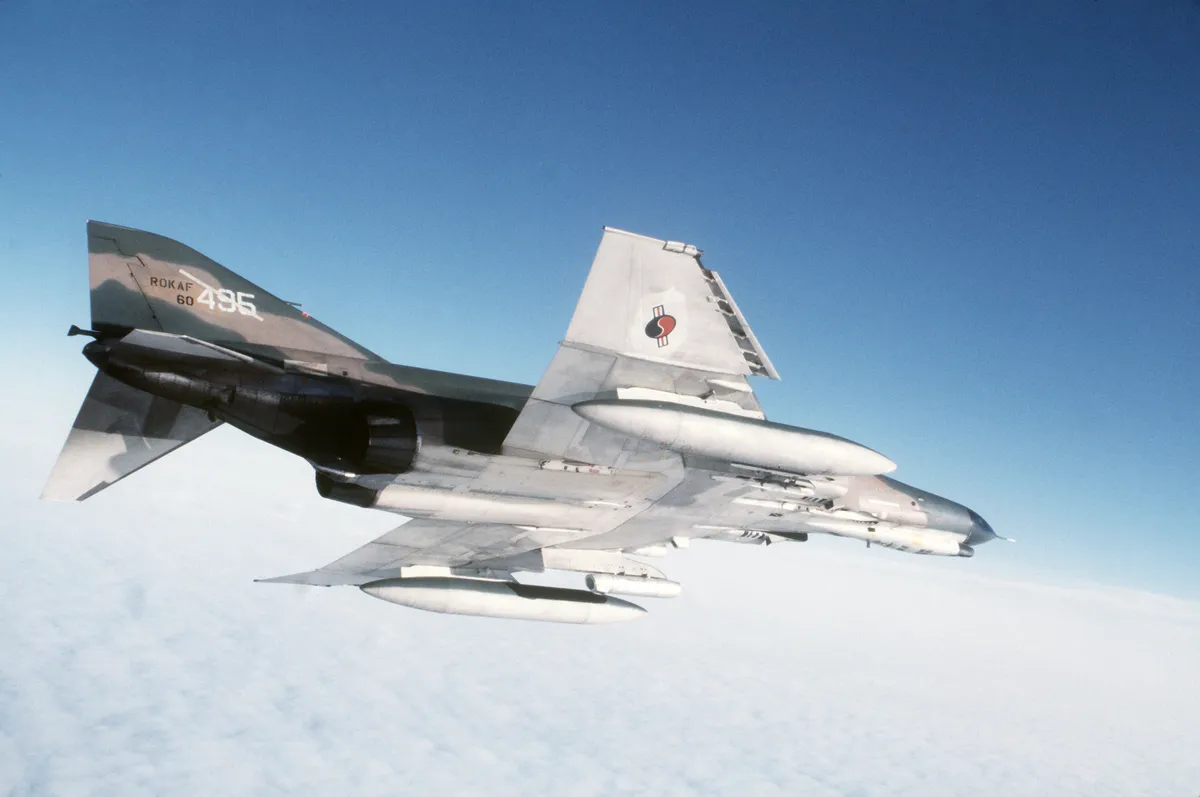
📷 US Air Force (Public Domain, 1979) · Wikimedia Commons
🛂 Military Response
Pilots filed an official report after returning to base. However, the incident occurred during the US-ROK joint exercise period, so external disclosure was restricted. The case became known later through pilot interviews and testimony from related Korean military personnel.
Investigation results:
- Official investigation report kept confidential
- Reliant on pilot testimony
- Natural phenomena (Venus, weather balloon, aircraft misidentification) all reviewed but inconsistent with the object's maneuvers (33,000 ft rapid ascent, Boeing 747-class size)
🤔 Unresolved Questions
- Radar invisibility: A Boeing 747-class object going undetected on 1980-era radar (pre-stealth tech era) is highly anomalous
- F-4 chase-able speed: Object did not vanish instantly, maintained pursuable speed
- Allowed 300 m close reconnaissance: A normal foreign aircraft would have evaded immediately
📺 Significance
- Best-known Korean military UFO case with official pilot testimony
- Reported by Korea Times in 2017, cited in English-language sources
- Frequently cited in international Korean military UFO references (MUFON, etc.)
- Possible connection to the 1980 Cheorwon UFO crash report from the same March 1980 timeframe (separate case)
📚 References
- Korea Times "South Korean Air Force and UFOs" (2017)
- Namuwiki — UFO (Korean cases)
- Pilot interview materials
🛂 Korea Air Force Documentation
The 1980 Team Spirit F-4 incident is the best-documented official Korean UAP case:
- ROK Air Force formal flight records
- Multiple F-4 Phantom II crew witnesses
- Radar tracking (Daegu → Gangneung route)
- Concurrent with U.S.-ROK Team Spirit exercises (massive military operations)
Combined with 1976 Cheongwadae, this establishes the pattern of early 1980s Korean UAP encounters with military significance. Both cases demonstrate ROK military serious UAP responses without subsequent public disclosure — a pattern continuing through 2024 with no formal Korean AARO.