📅 Overview
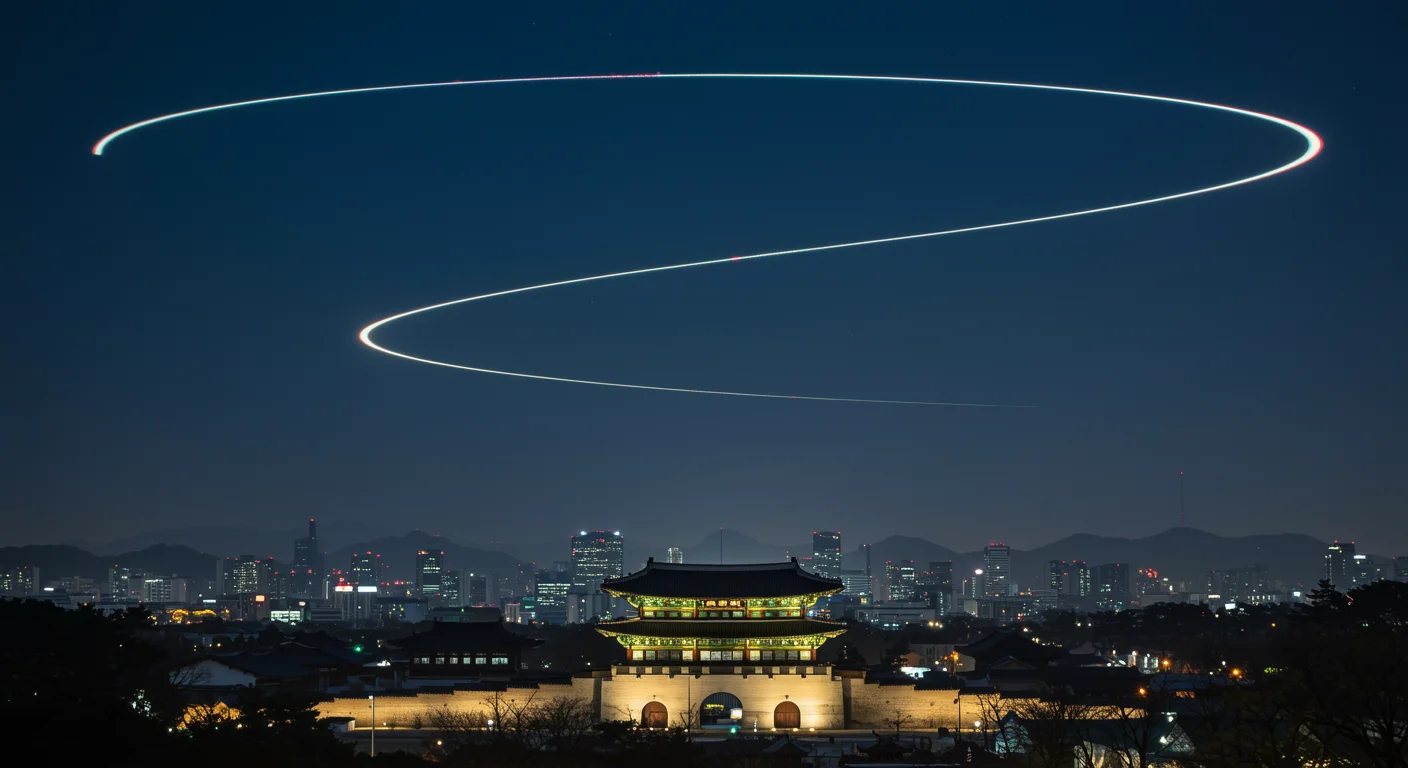
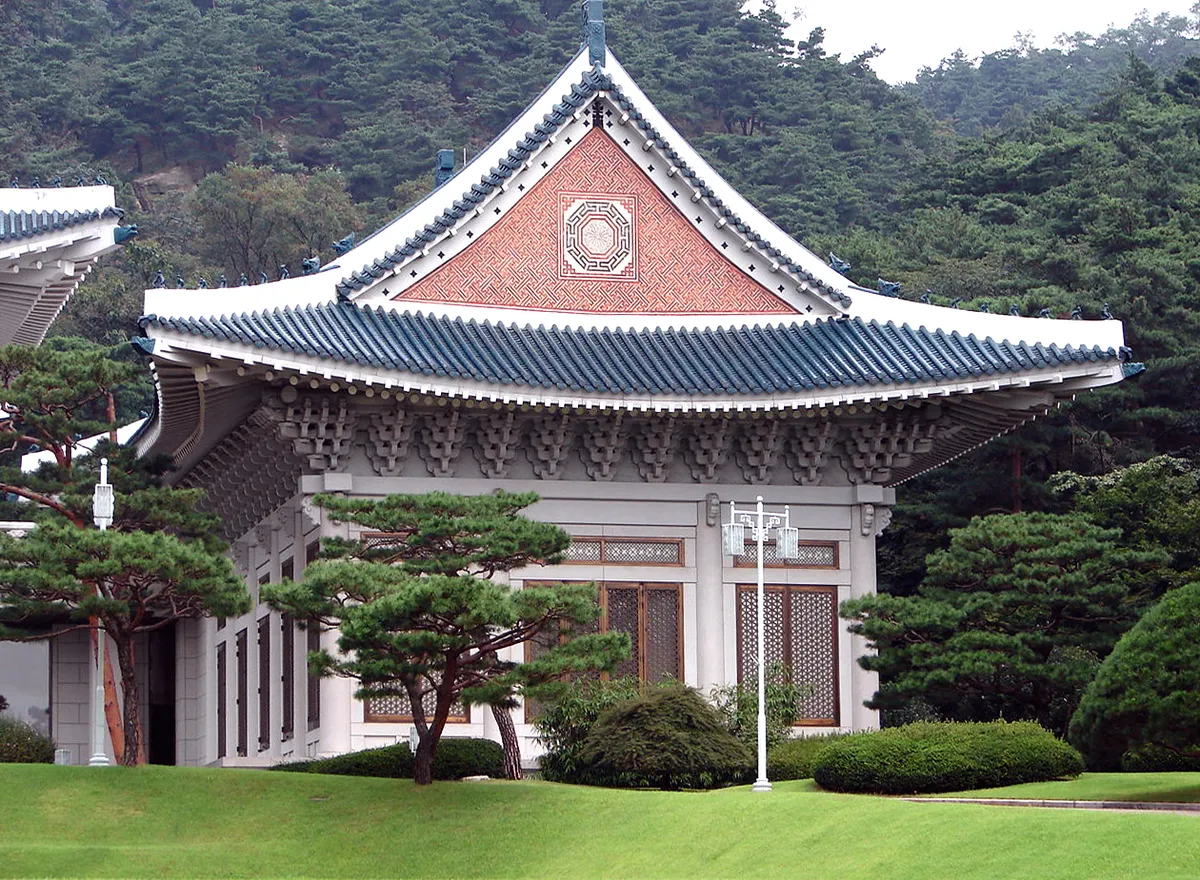
The 1976 Seoul Cheongwadae UFO Incident occurred on October 14, 1976, between 6 PM and 8 PM over northern Seoul, South Korea. The unidentified objects entered the Cheongwadae (Presidential Blue House) restricted airspace P-73B, prompting the Republic of Korea military to fire live ammunition at them — the only officially recorded instance of the ROK military using force against UAPs. This case is comparable to the 1942 'Battle of Los Angeles' in the United States, where military weaponry was discharged against unidentified airborne objects.
📷 Wikimedia Commons / Steve46814 (CC-BY-SA 3.0)
🔍 Object Appearance and Movement
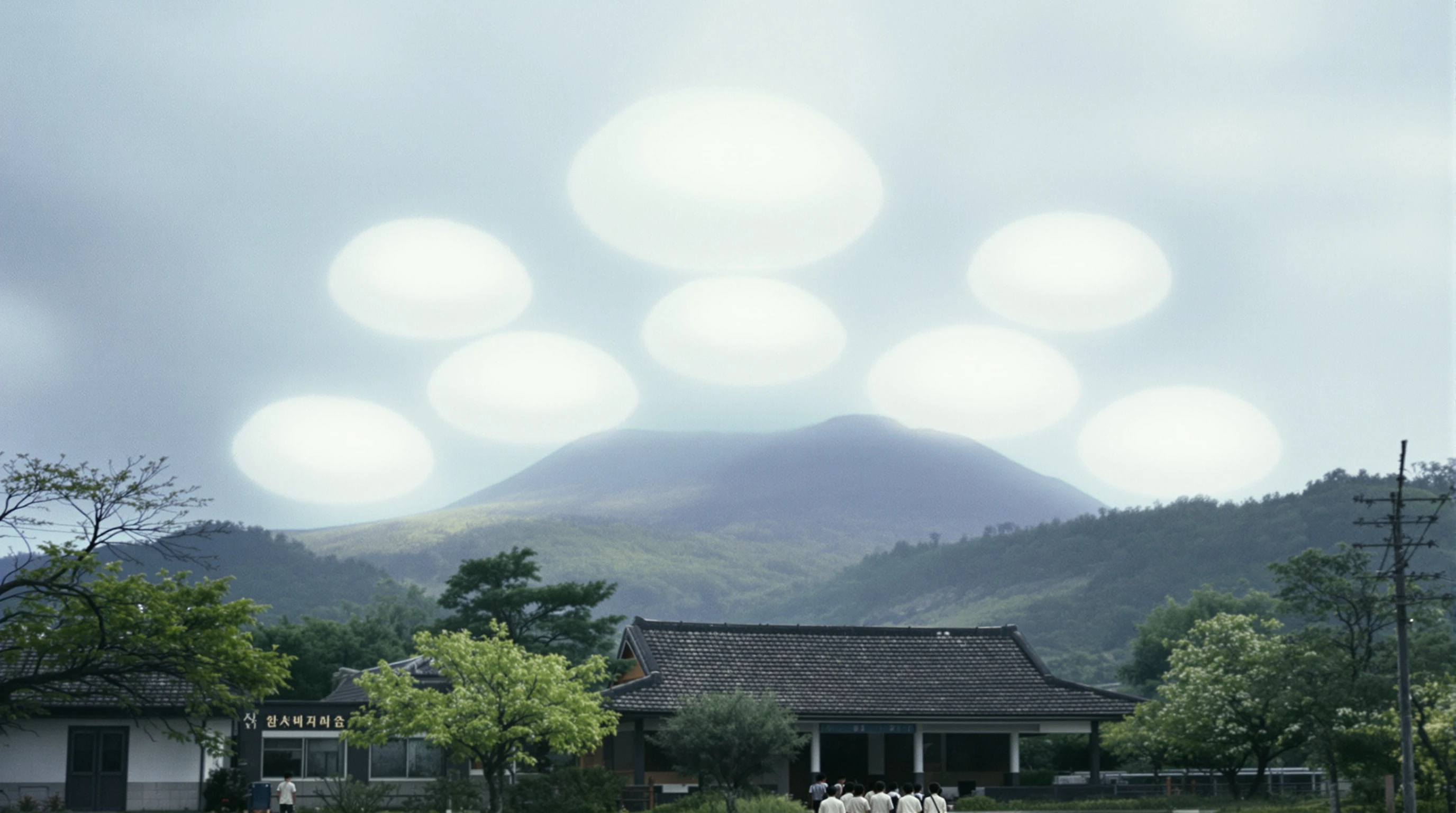
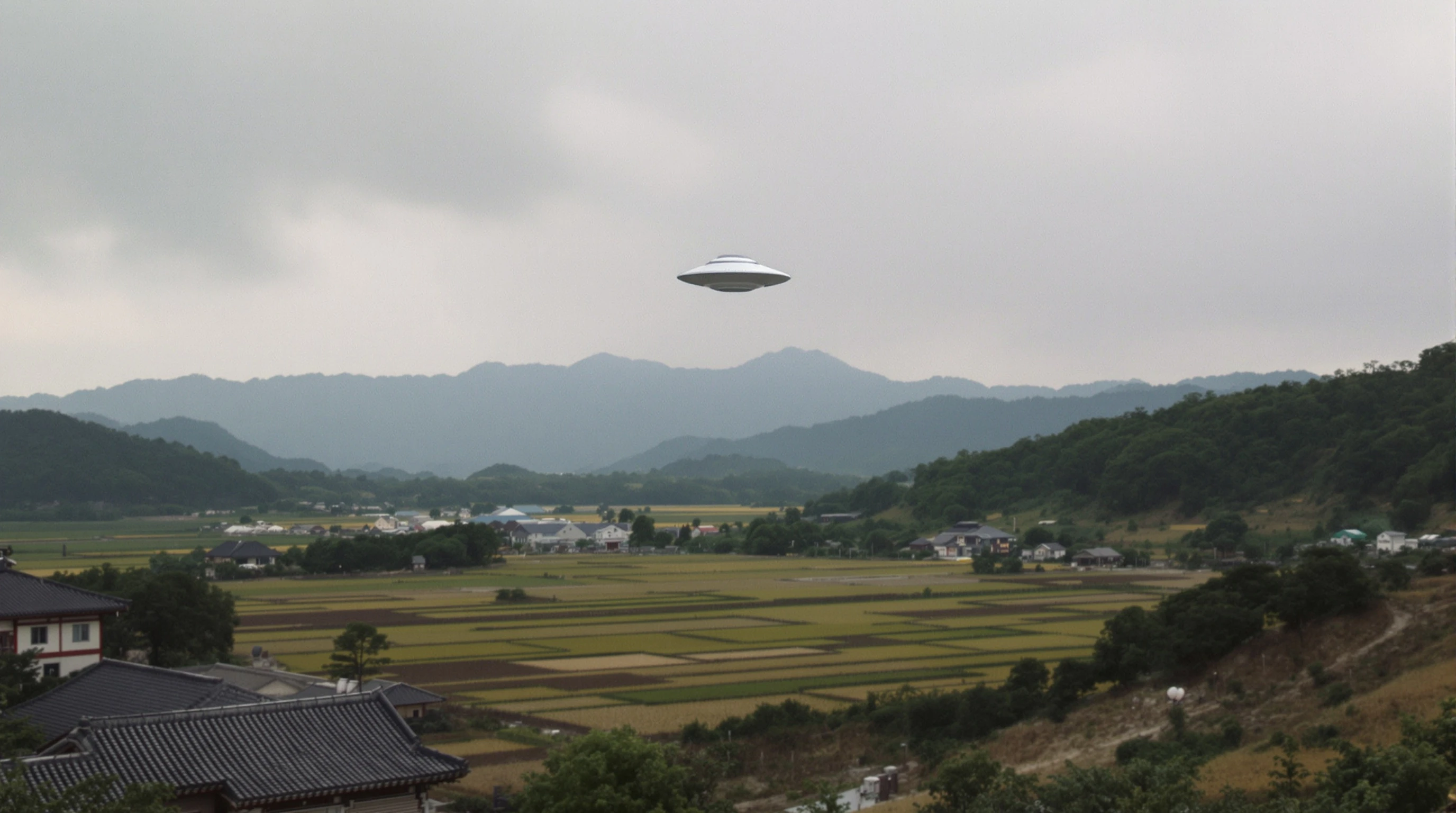
At dusk, Seoul residents witnessed approximately a dozen unidentified flying objects crossing the sky. Witness accounts converge on the following:
- Bright luminous lights resembling flares
- Maintaining a semicircular formation at constant speed
- Slowly moving southward (toward Cheongwadae)
- Notably silent — far less engine noise than typical aircraft
🛂 Military Response and Shoot-down Attempt
When the objects approached within 2 NM (3.7 km) of the P-73B restricted airspace, the Capital Defense Command's 10th Anti-Aircraft Artillery Brigade issued warning shots demanding course change. The objects ignored the warning and entered P-73B, heading toward the adjacent P-73A airspace directly above Cheongwadae.
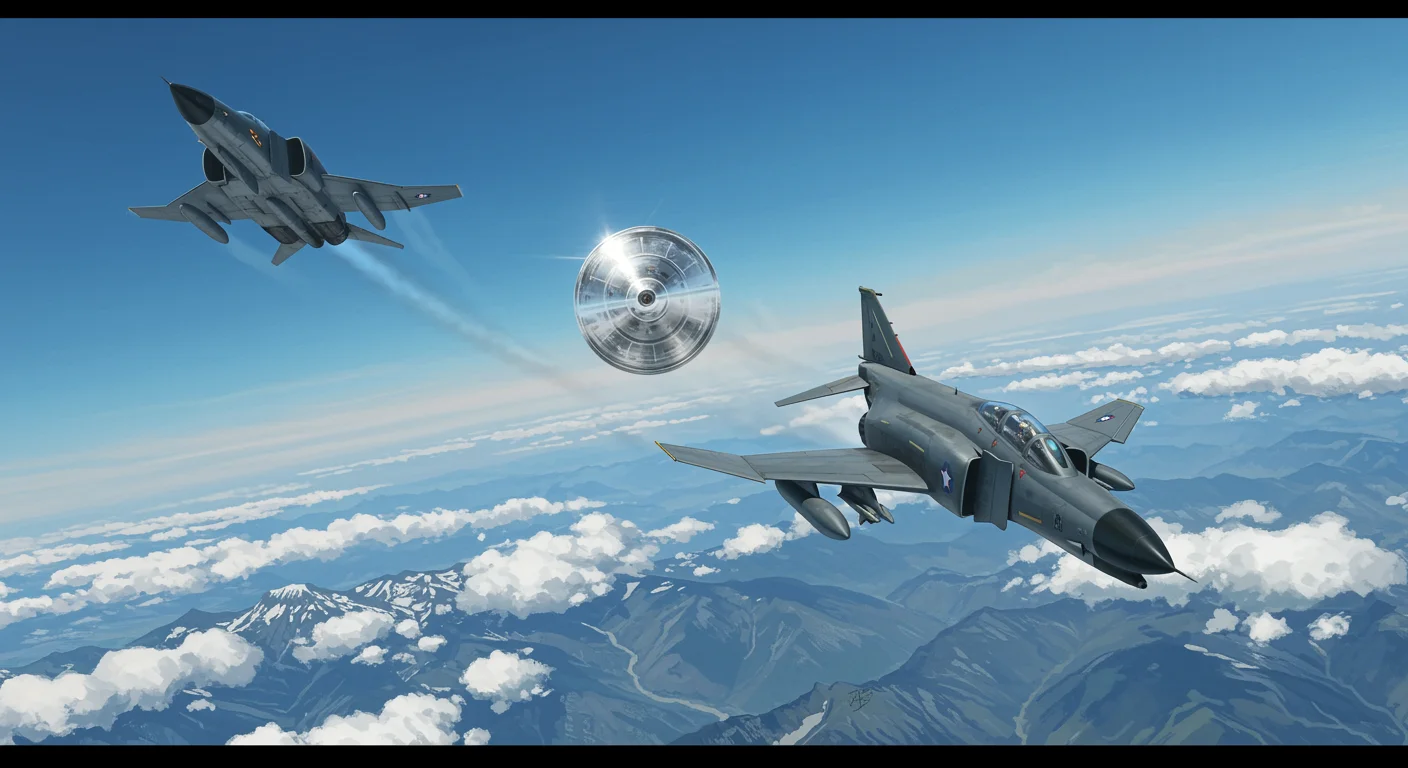
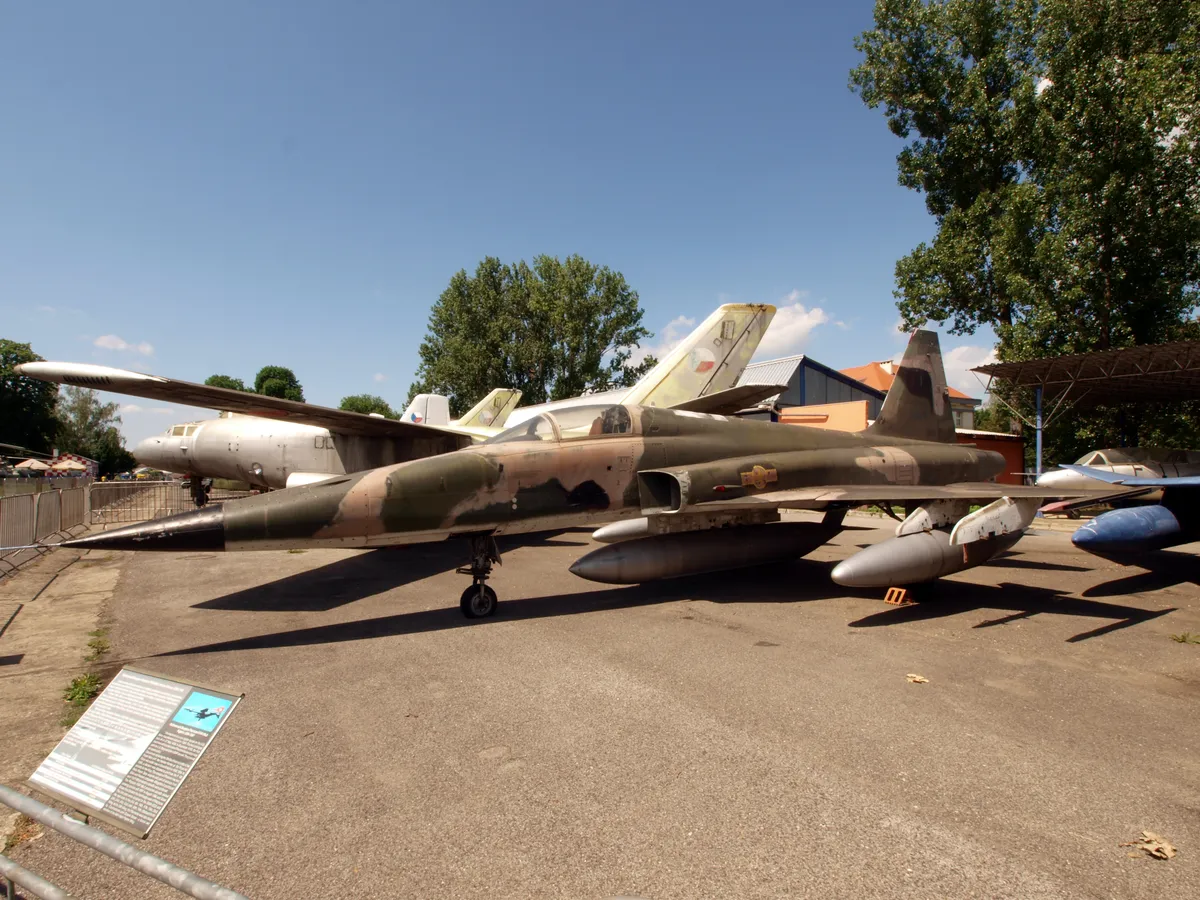
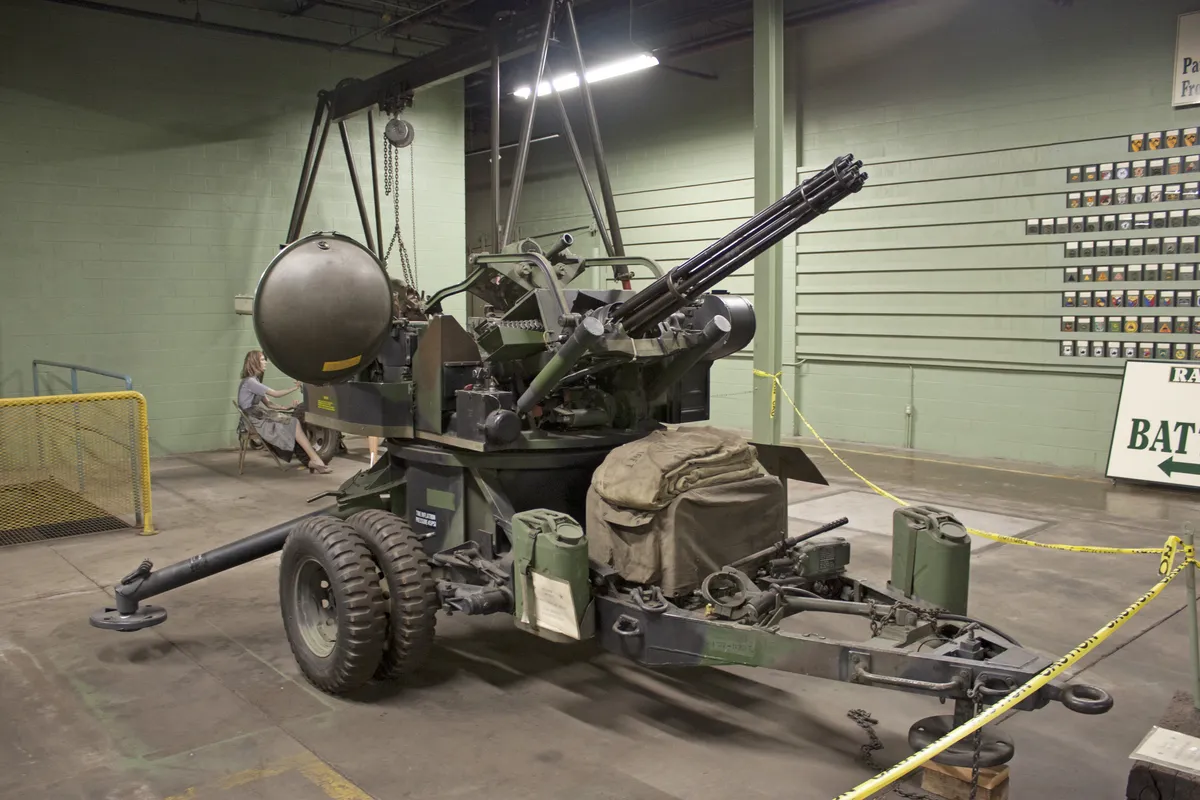
In response, F-5A and F-5E fighter jets of the 15th Special Mission Wing were scrambled. Around 18:15, KM167A3 20mm Vulcan cannons and machine guns opened fire on the objects. A simultaneous warning was broadcast over the 121.5 MHz military emergency frequency.
The shoot-down attempt itself failed, but the use of live ammunition by the ROK military against unidentified aerial objects is an exceptional and uniquely documented event.
📷 Wikimedia Commons / AlfvanBeem (Public Domain CC0)
📷 Wikimedia Commons (US Army Public Domain)
⚠️ Civilian Casualties
The indiscriminate anti-aircraft fire produced ricochet ammunition (跳飛彈) that caused civilian casualties — a fact that became a major controversy in subsequent years:
- 1 fatality
- 31 injured
The casualties were only briefly reported at the time and were uncovered more fully in later investigative journalism.
🏛 Official Government Statement
On October 15, the Ministry of National Defense and the Ministry of Transportation jointly announced:
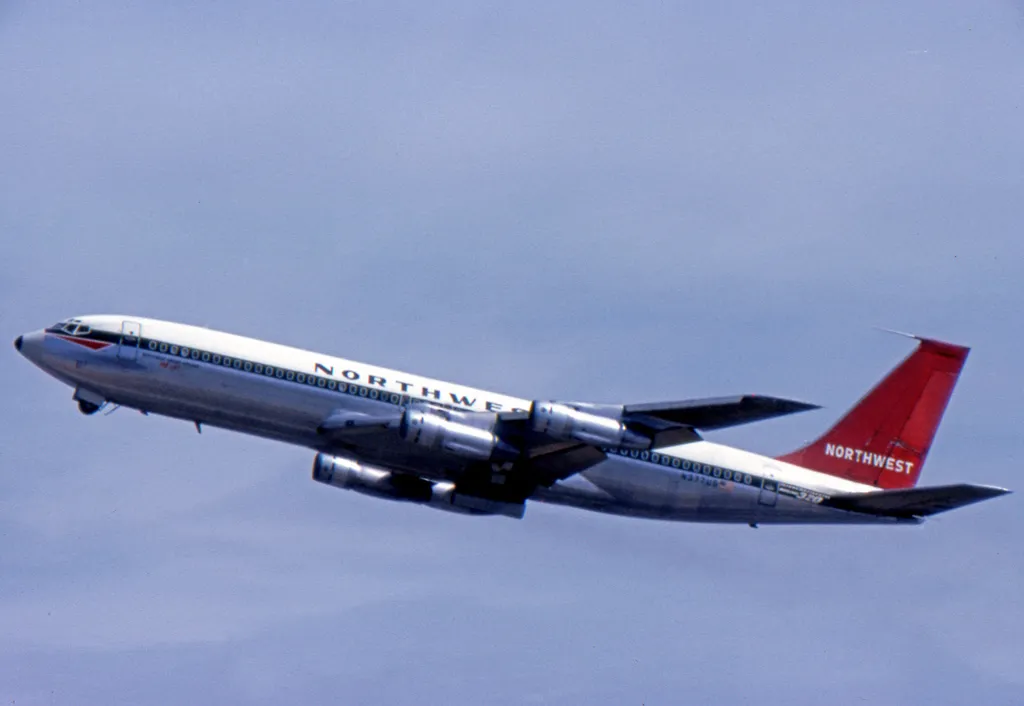
"At approximately 18:19 on the day in question, a Northwest Airlines Boeing 707 cargo charter flight (Flight 902) erroneously entered the restricted airspace above Cheongwadae, prompting warning fire."
This statement officially closed the incident.
📷 Wikimedia Commons / RuthAS (CC-BY 3.0)
🤔 Unresolved Questions
However, civilians and researchers have persistently raised several issues:
- Timeline discrepancy: Cross-referencing the MND response log, Seoul departure control communications with Northwest Airlines, and US Congressional declassified documents, the timestamps do not align. The military fire appears to have occurred before the Northwest aircraft changed course.
- Visual mismatch: Eyewitnesses described "approximately a dozen luminous objects in a semicircular formation" — a single Boeing 707 cargo plane does not match this description.
- Severity of the engagement: Firing Vulcan cannons and machine guns at a civilian airliner for mere airspace incursion would be a disproportionate response.
These unresolved questions have been investigated by SBS' investigative program 'I Want to Know' and other documentaries, but the gap between the official explanation and eyewitness accounts has never been fully closed — even after the release of US Congressional documents.
📺 Cultural Impact and Significance
The incident holds the following significance:
- The only officially documented case in modern Korean history of the military using force against a UAP
- Occurred during the late Park Chung-hee government — a politically sensitive period with heavy information control
- Featured in SBS 'I Want to Know' investigative reports and multiple 2010s documentaries
- The most frequently discussed UFO incident in the Korean UFO research community
- Not listed in the US AARO official case catalog, but cited in international UFO research as a documented Korean military UAP incident
📚 References
- Namuwiki — Seoul UFO Shoot-down Attempt Incident
- Seoul Shinmun (2020) "Blood pouring from shoulder — 1976 Cheongwadae UFO Incident"
- SBS 'I Want to Know' investigative reporting
- US Congressional declassified documents (CIA / DoD)
📜 Current Reassessment
The 1976 Cheongwadae UFO event remains the most significant Korean UFO incident on official record. Comparison with similar government-facility UFO events:
| Year | Country | Event | Comparison |
|---|---|---|---|
| 1976 | Korea | Cheongwadae UFO | ROKAF F-4E fire, no public records |
| 1980 | UK | Rendlesham | Multiple USAF personnel, Halt Memo |
| 1980 | Korea | Cheorwon UFO | Same era, undocumented rumor |
| 2004 | USA | Tic-Tac Nimitz | Navy pilots, FLIR data |
Korea has no AARO-equivalent UAP investigation body. The 1976 event remains the highest-profile Korean UAP case with no government formal acknowledgment, despite extensive military involvement.