📅 Overview
On the night of February 24–25, 1942, the US military fired approximately one hour of massive anti-aircraft barrage over Los Angeles. Just two months after Pearl Harbor, with Japanese mainland attack fears at their peak, the military mistook unidentified aerial objects for Japanese aircraft and fired over 1,400 20-pound shells — known in UFO history as the "Battle of Los Angeles."
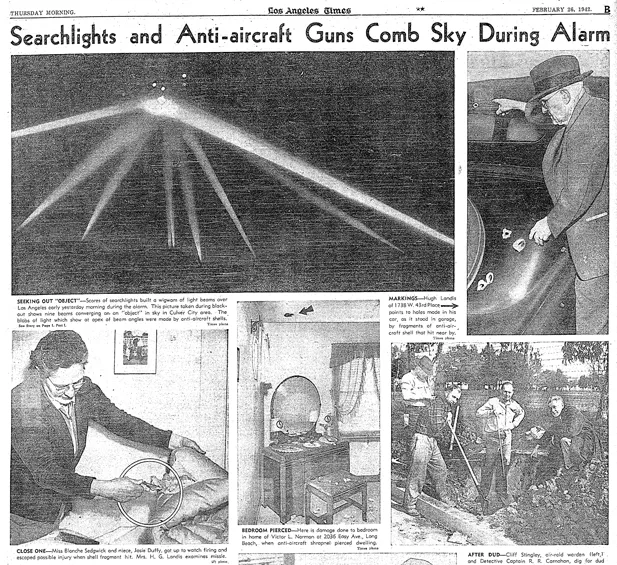
📷 LA Times (Public Domain, 1942) · Wikimedia Commons
🔍 Event Sequence
Feb 24, 19:18: Navy intelligence warned of possible enemy attack on California coast Feb 25, 02:25: LA air raid sirens activated
- 02:43–04:14 anti-aircraft fire
- 1,440 20-pound shells fired
- Civilian deaths: 5 direct, plus heart attacks and vehicle accidents
Reported objects:
- Multiple luminous objects (civilian + military reports)
- Very slow movement / stationary
- Clearly captured in LA Times photograph
🛂 Official Government Explanation
War Department:
- Weather balloon misidentification → adopted immediately in 1942
- War Secretary Henry L. Stimson's official position
Navy unofficial position: Immediately denied: "No air raid"
🤔 Analysis
Possible explanations:
- Weather balloon (official)
- Japanese Fu-Go balloon bombs — actual deployment 1944–45, 1942 chronologically impossible
- Civilian aircraft misidentification
- Mass panic self-amplification — extreme post-Pearl Harbor tension
📺 Significance
- First case of US military force used against unidentified aerial objects on continental US
- Unique US parallel to the 1976 Korean Cheongwadae UFO incident
- 1942 LA Times front-page photo is a classic UFO research reference
📜 Historical Significance
Battle of Los Angeles (1942) is the first U.S. mainland military-UAP engagement in recorded history. The 1983 USAF re-investigation concluded weather balloons + panic, but the case remains culturally significant:
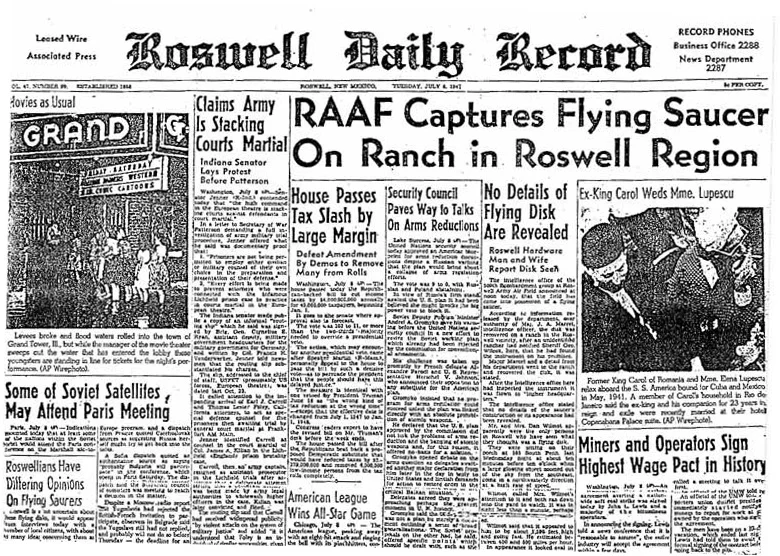
- Pre-Roswell (1947) anomaly establishing the "government denies, military fires" pattern
- LA Times 1942 front page = most enduring UAP photo in Public Domain
- Inspired 'Battle: Los Angeles' (2011) movie
Compare with 1976 Cheongwadae (Korea military fires on UAP). Two of the world's most well-known military-UAP engagement cases — both ultimately classified as "unidentified" or "weather phenomenon" with significant skepticism.